
My original post on Jim Kirkwood is, as of when I’m writing this, the most viewed post on this incarnation of Life in the Vinyl Lane (you can also read about his Eternal Champion Trilogy of albums HERE). This probably shouldn’t be surprising. While dungeon synth (which I’ll be referring to as DS from here forward), the genre Kirkwood is most associated with, is still a fairly obscure, it continues to grow and attract new fans. The most popular Facebook group dedicated to DS has over 12,000 members and there are dozens of smaller and more niche groups to choose from. On Instagram #dungeonsynth has been used over 157,000 times. Discogs has over 4,000 master releases tagged as DS. Meanwhile Bandcamp has 35,000+ digital releases using the tag and 2,600 cassettes (which are arguably the preferred format in the genre). It’s actually getting hard to keep up with the new releases, but that also makes it fun – the bar to entry is low, but the stakes are too. No one is getting rich playing DS. Yes, some of the bigger names can tour and probably make a few bucks, but I doubt anyone is making a full-time living at it.
Anyway, Jim Kirkwood. He’s been on the DS radar for about a decade, mentioned in various boards and blogs. He even got interviewed by Bandcamp in 2023 (HERE). In the last few years, however, there has been some debate as to Kirkwood’s place in the DS canon. I’m not going to get too deep into it, but as of today there are three books published on the genre and they all take differing stances.
The first book came out originally in 2021 as The Hum of Dungeon Synth before receiving a more formal printing a year later under the new title, Dungeon Synth – The Rebirth of the Legend. Author Ruslan Akimov doesn’t mention Kirkwood at all in his opening chapter about the genre’s history, noting Equitant’s The Circle of Agurak (1993) as perhaps the earliest DS release. The next book published was 2024s 101 Dungeon Synth Albums You Must Hear… Before You Rot in a Dungeon by S. of Dungeon Synth Zine fame (and who interviewed Kirkwood in issue #7 of the zine), who has long been a proponent of Kirkwood’s role, so much so that in his chronological list of DS albums Kirkwood’s 1990 King of the Golden Hall holds down the very first spot (S. also includes Equitant’s The Circle of Agurak as #3 on his list). While unsure if Kirkwood’s earlier efforts quite reach the classification as DS, S. is confident about King of the Golden Hall. “It’s dungeon synth in its very early phase,” he writes. “Some may argue that it’s not dungeon synth because of how heavy the Berlin school influences are. If they do, it’s OK.”
That brings us to Jordan Whiteman’s Dark Dungeon Music – The Unlikely Story of Dungeon Synth, which also came out in 2024. Whiteman makes his opinion on the matter quite clear. In fact his chapter on the genre’s origins has a section tiled “The Problem With Jim Kirkwood”, so you can probably guess which direction this is going. “A name commonly cited in this conversation is Jim Kirkwood, though his music is sonically too far removed to be called dungeon synth,” Whiteman writes. “Occasionally, some angry Kirkwood fan takes offence to the idea that Mortiis is the true facilitator of the genre…” Whiteman doesn’t fully dismiss Kirkwood, mind you. He simply takes the position that his work does not meet all the criteria Whiteman lays out as necessary to meet the definition of DS, and instead the author lands on Mortiis as the genre’s progenitor, which is probably the most standard take as well.
So here we are, three different experts with three different opinions. Were Kirkwood’s early works the ground zero for what we know call dungeon synth? And at the end of the day, does it matter? I mean really matter? Many DS fans, myself included, feel his two earliest trilogies (influenced by Middle Earth and the Eternal Champion, respectively) fit quite comfortably within the boundaries of the genre. I’m fairly liberal in what I include, though, so take that with a grain of salt. I just don’t see the need to get overly precious about it. Everyone can agree that Mortiis was and remains a seminal figure in DS (all three authors agree on this point), and Kirkwood’s role, or non-role depending on your position, does nothing to diminish Mortiis’ place in the canon nor anyone’s ability to enjoy Kirkwood’s music. I’m not sure you can every truly identify one specific person or band as the originator of any genre (or subgenre, or subsubgenre…). As for me, I think there’s room for both Kirkwood and Mortiis on DS’ Mount Rushmore.
Which brings us to Kirkwood’s Sandman trilogy, inspired by the Neil Gaiman series The Sandman comics. Originally self-released in the 1990s in very limited runs, they just got the re-issue treatment from Out of Season. And not only did they come out on cassette (each title in an edition of 300), but also CD (editions of 300) and vinyl (editions of 400, 150 in black and 250 in orange). I ordered the cassette bundle and as always Out of Season did a fantastic job – they look and sound great. These three albums see Kirkwood’s sound moving into a more modern universe, but one still defined by an underlying darkness. The below reviews are less about specifics and more about the feelings these albums evoke (at least in me).
Castles Of Sand (1992)
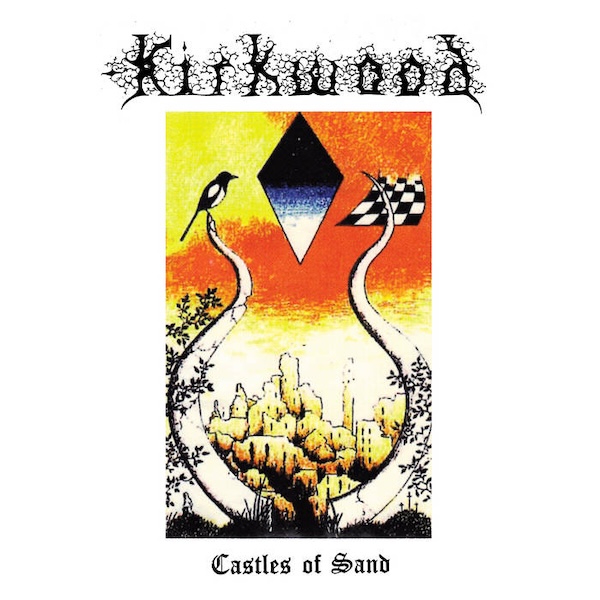
Kirkwood starts slow and intentional. Simple, sparse notes like an electronic heartbeat, eventually overlaid with a flight of fancy, one that tries to break free from the underlying tension, but prevented from doing so by some kind of dark gravity, the highs and lows locked into a dangerous orbit as they eye one another warily, each daring the other to make a move. The B side opens even darker, almost subterranean, a creeping horror slowly building as you find yourself lost and trying to find your way by feel. The light does eventually come, but it’s dim, unable to fully break through the darkness. It’s enough, however, for you to at least begin to find your way out… though you never quite get there.
Lord Of the Dreaming (1992)
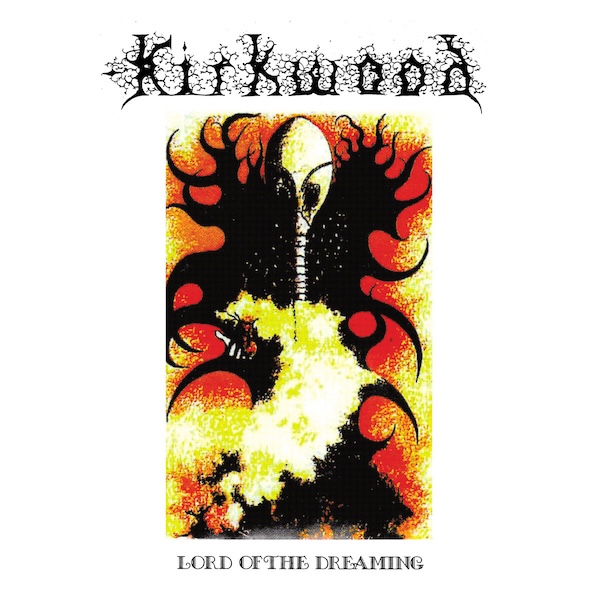
Discordant bells usher in the Lord of the Dreaming, swirling nightmares of myst and gloom. Choir-like voices beseech to be released from this torment, this prison of the mind and soul, but to no avail. Eventually a small pulse of light breaks through, perhaps a single spirit of goodness to cut through the murk and grime. The forces of night try to break it, to crack it open like an egg and consume what’s inside, but to no avail, for the light is too strong. The B side opens with a brisk pace, a pursuit in progress as our mote of light has escaped and is on the run, staying ahead of those who would catch it and return it to its prison. Eventually the light finds its way back to the underworld, piercing it to its heart and defeating it.
Through A Dark Glass (1993)
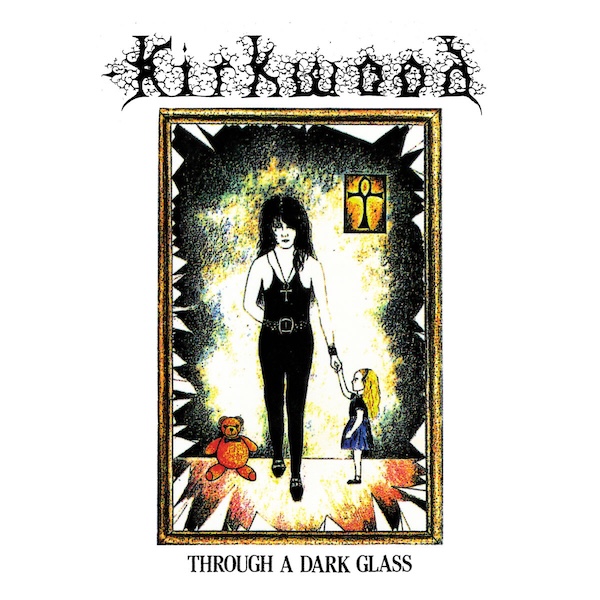
The final entry in the Sandman Trilogy finds Kirkwood taking on a more soaring style. There is still some metallic percussion, but it’s not really a low end – more the sound of hitting a sheet of metal, adding to the coldness of the synths. It conjures up images of stylistic movies from the late 80s, guys wearing linen jackets with shoulder pads sewn into them and loafers with no socks, everything in a more modern pastel Art Deco. The B side is a bit darker, a suspenseful soundscape with more organic percussion and slashing streaks of synths penetrating the underlying music like lasers tearing through the tension and fear, shredding it into nothing.
Digital versions of these albums can be found on Spotify as well as Jim Kirkwood’s Bandcamp page HERE. He also has physical copies available for sale. You can also get the cassettes, CDs, and records at Out of Season’s website HERE, along with a ton of other great dungeon synth titles (and patches, and clothes…).